What to Check Before Your First Overnight on Shared Ground
Shared ground is not a private room with trees. Before you pay, before you pack the car, and before you discover a slope at headlamp hour, these checks tell you whether the site type you chose matches the friction level you are ready to live with for one night.
Before you book: read the site type, not the photo
Listing photos show the best pad on the best day. What you need is the site category: drive-in loop, walk-in cluster, group field, or motorhome pull-through with shared hookups. Each category carries a different noise profile, a different distance to toilets, and a different tolerance for arrival time.
Call or message the host with plain questions if the listing is vague. Ask about generator windows, quiet hours enforcement, and whether check-in stays open if you arrive after dark. A beautiful map is useless if the gate procedure is unclear and the host goes off shift at sunset.
The photo sells the view. The site type sells the night you will actually sleep through.
The booking checklist
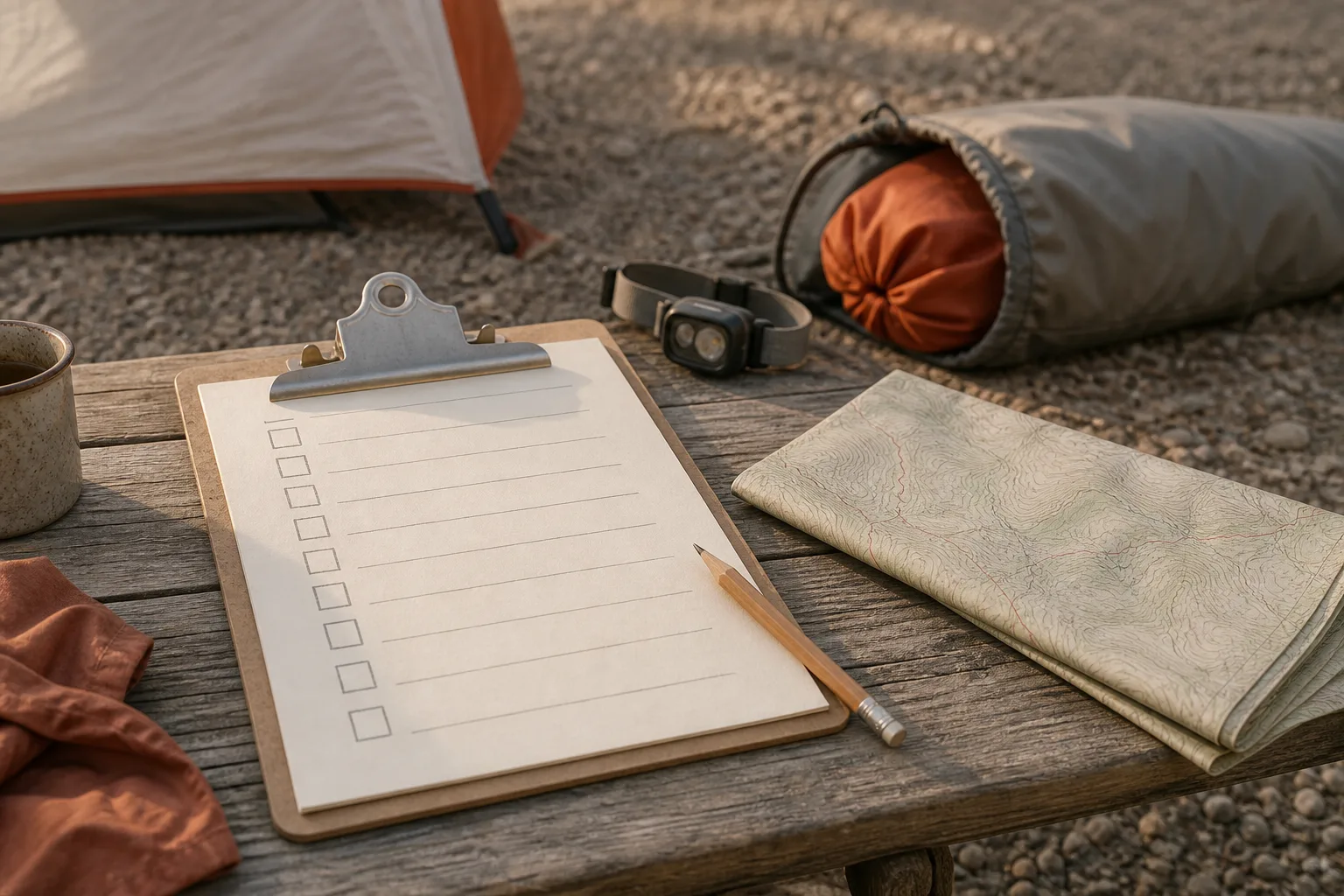
Work through this list while you still have other options on the map. A single "no" does not always kill the trip, but three "unknowns" usually means you are guessing with money already spent.
- Confirm pad size against your tent footprint plus guyline clearance.
- Identify whether water is at the pad, at a central tap, or carry-in only.
- Read fire rules for the season — bans change faster than listing updates.
- Note bathroom type and distance; vault toilets at the far end of a loop matter at night.
- Check cell coverage if you rely on it for weather or host contact.
- Ask whether food storage rules require lockers, bear poles, or vehicle storage.
Before you pack: match gear to shared friction
First overnights fail in small ways: the wrong stake for gravel, no headlamp while cooking, sandals for a long walk to water. Packing for shared ground means packing for visibility and repair, not just comfort.
- Bring earplugs even if you consider yourself a heavy sleeper — loops get loud at predictable edges.
- Carry a headlamp with a red mode; white beams across a row read as intrusion.
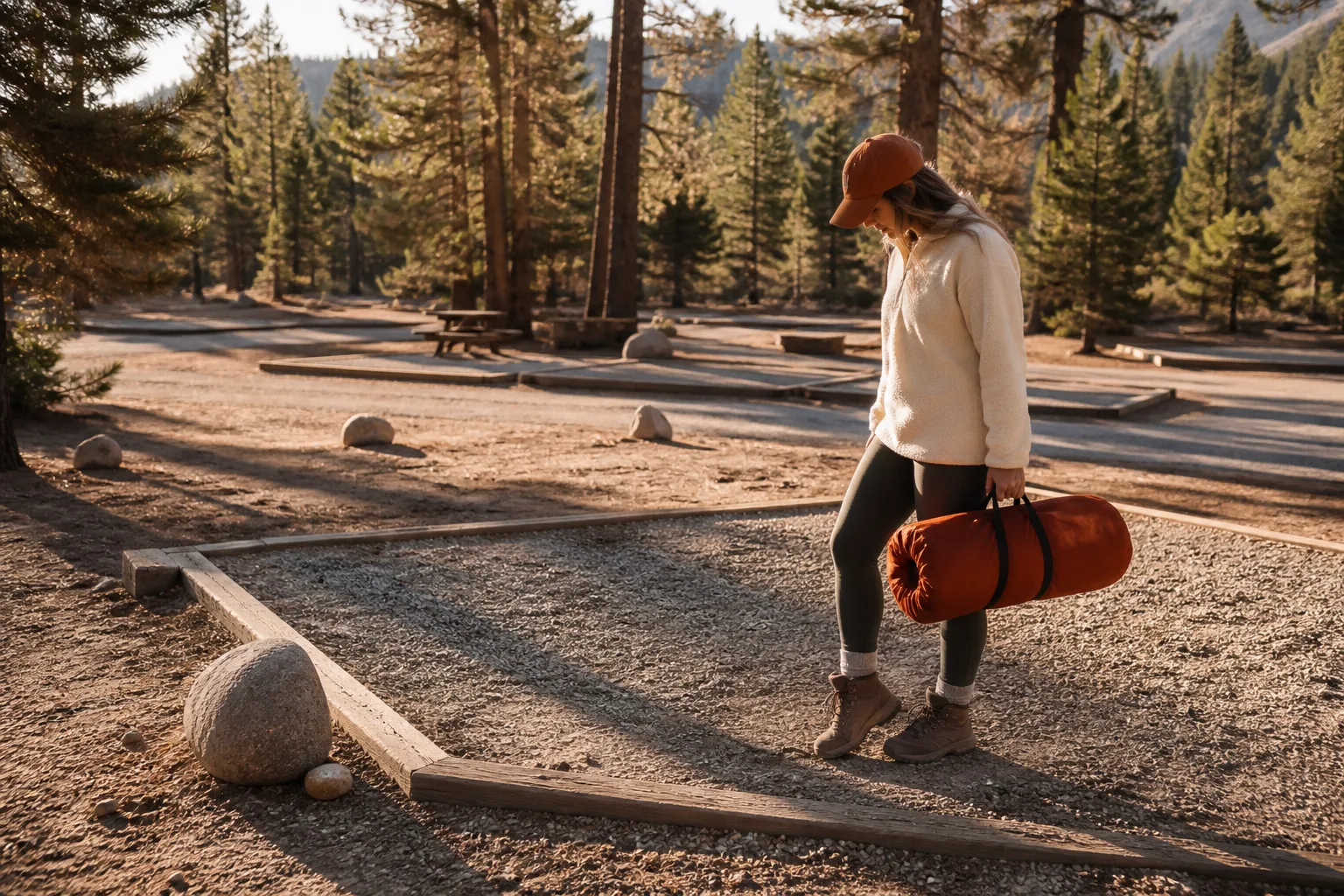
- Pack a ground sheet sized for the pad, not just the tent — gravel tears cheap poly on setup night.
- Include a small repair kit: extra stakes, duct tape, pole sleeve, and a compact towel for shared sinks.
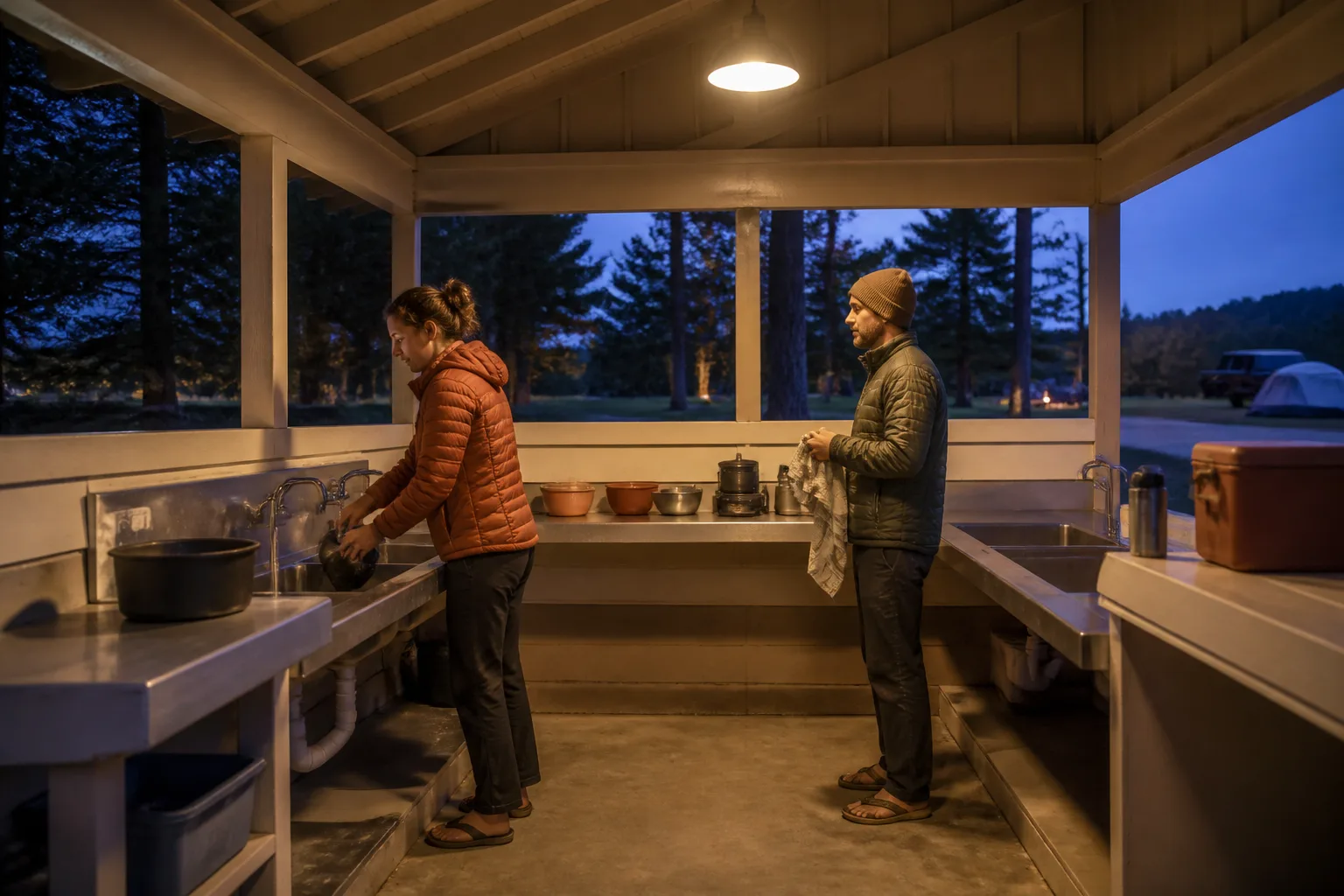
- Plan a one-pot meal that does not require the shelter kitchen at peak hour unless you intend to wait.
The people factor nobody lists
Shared ground means shared timing. Weekend loops near trailheads fill with early risers; holiday weekends stack families who treat quiet hours as suggestions. If you need absolute silence to sleep, a busy drive-in loop is the wrong first test. A weekday shoulder-season night teaches the mechanics with lower social cost.
Travelling with children or dogs adds rules you must read twice. Leash length, beach access, and where bikes may cut through pads are host-specific. Assume neighbours will notice behaviour before they introduce themselves — plan accordingly.
Ready or not: a honest final gate
You are likely ready if you can pitch in one try without a video, carry water comfortably if needed, and accept that someone may walk past your door ten minutes after you lie down. You may want to defer if weather is severe for your skill level, if arrival will be hours after dark on an unfamiliar loop, or if your group cannot agree on basic quiet-hour behaviour.
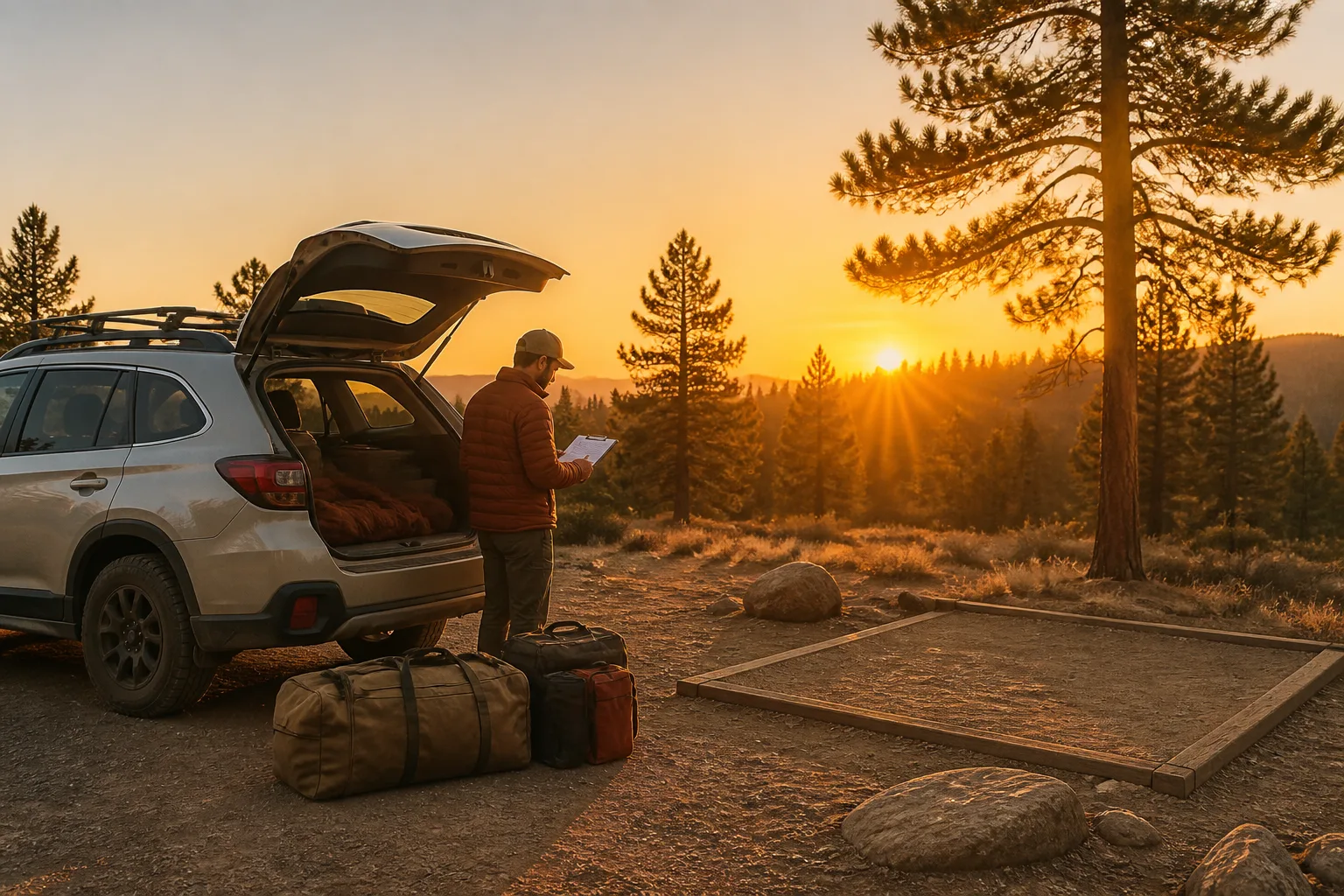
None of this is about being tough enough. It is about choosing a first night where the lesson is layout and routine, not recovery from a preventable mess. Get the checks done on paper before the clipboard stays in the car and the slope argument starts in the gravel — that is the whole point of a first overnight on ground you share.