Choosing a Tent Pad Before the Light Goes
Most pad mistakes happen after the poles are out, when slope and neighbour spacing are already fixed. This sequence keeps your boots on the gravel until the layout is decided — while shadows still tell the truth about the ground.
Walk the pad before you unpack
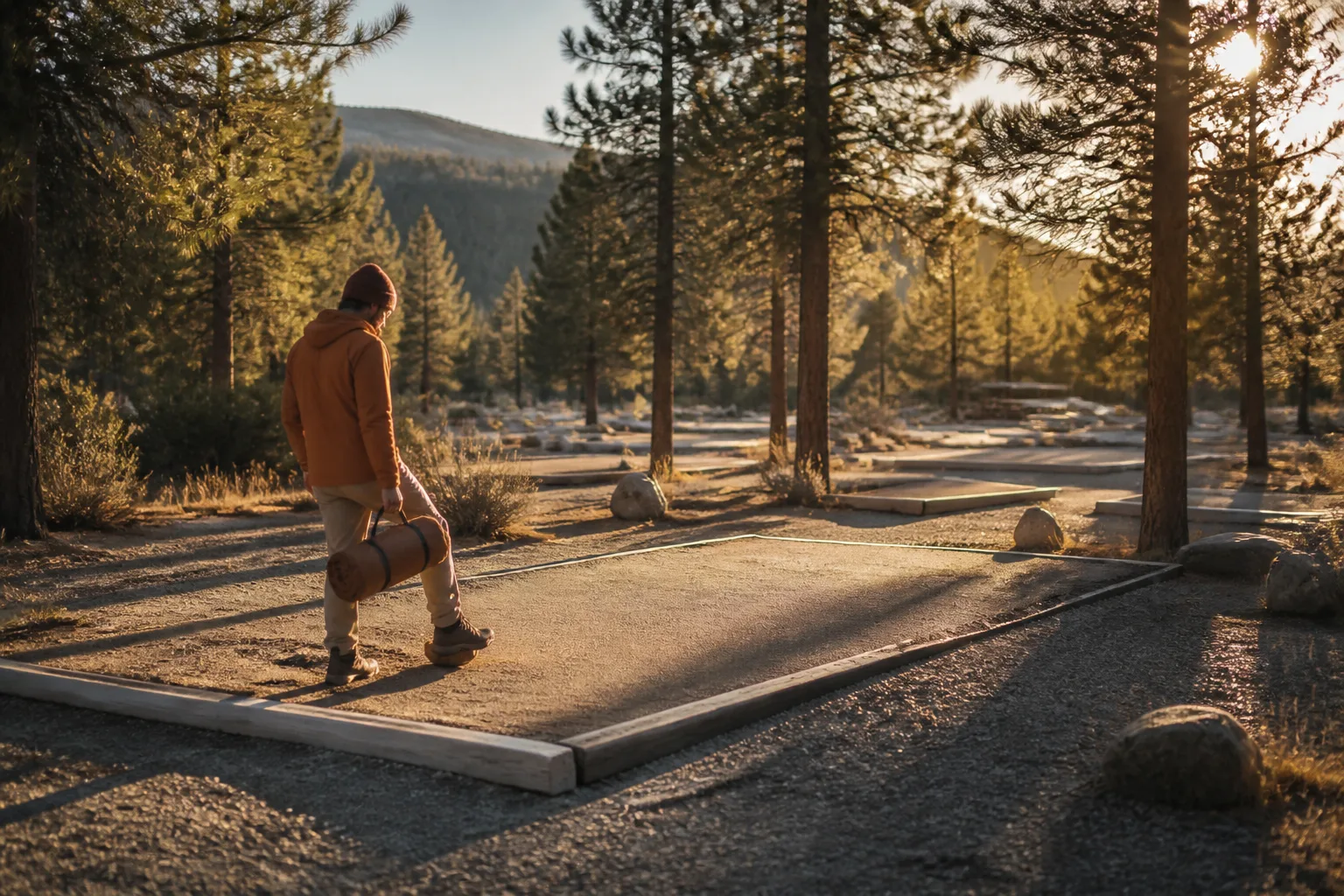
On most loops the pad is a rectangle of compacted gravel or raised timber frame with a number on a post. Hosts assign it; you do not swap without asking. What you control is orientation: which corner becomes the head end, where the door faces, and how much clearance you leave to the next fly.
Start at the uphill edge if you can find it. Water follows gravity on every pad, even ones that look flat from the road. Step along the long axis with your heel first, the way you would test a floorboard. A slope you barely notice standing still becomes obvious when you lie down and blood rushes to your feet.
Mark the high point mentally — a pine root, a painted corner marker, a slight crown in the gravel. That is where your head goes unless wind direction forces a different layout. Sleeping with your head downhill is a recipe for a restless night and a headache that has nothing to do with altitude.
Door direction is a social decision
Tent doors are not neutral. On a shared loop they point at neighbours, at the road, at the bathroom path, or at a view you will never see once the rain fly is on. Regulars choose door direction the way apartment dwellers choose which way the sofa faces: for privacy first, view second.
A door aimed at the parking spur invites headlights across your ceiling all evening. A door aimed at the pit toilet path means foot traffic at dawn. A door aimed directly at the next site means you and your neighbour share every zipper noise and headlamp beam.
The pad looks empty at four in the afternoon. By nine it is a row of glowing domes. Decide where your door opens before you become part of that row.
If the pad is narrow and the neighbour is already pitched, treat their door as a fixed object. You rotate around it, not through it. When both sites are empty, walk to the midpoint between pads and look back. The gap that felt generous from the car often shrinks to a single arm span once two vestibules inflate.
A five-point slope and spacing check
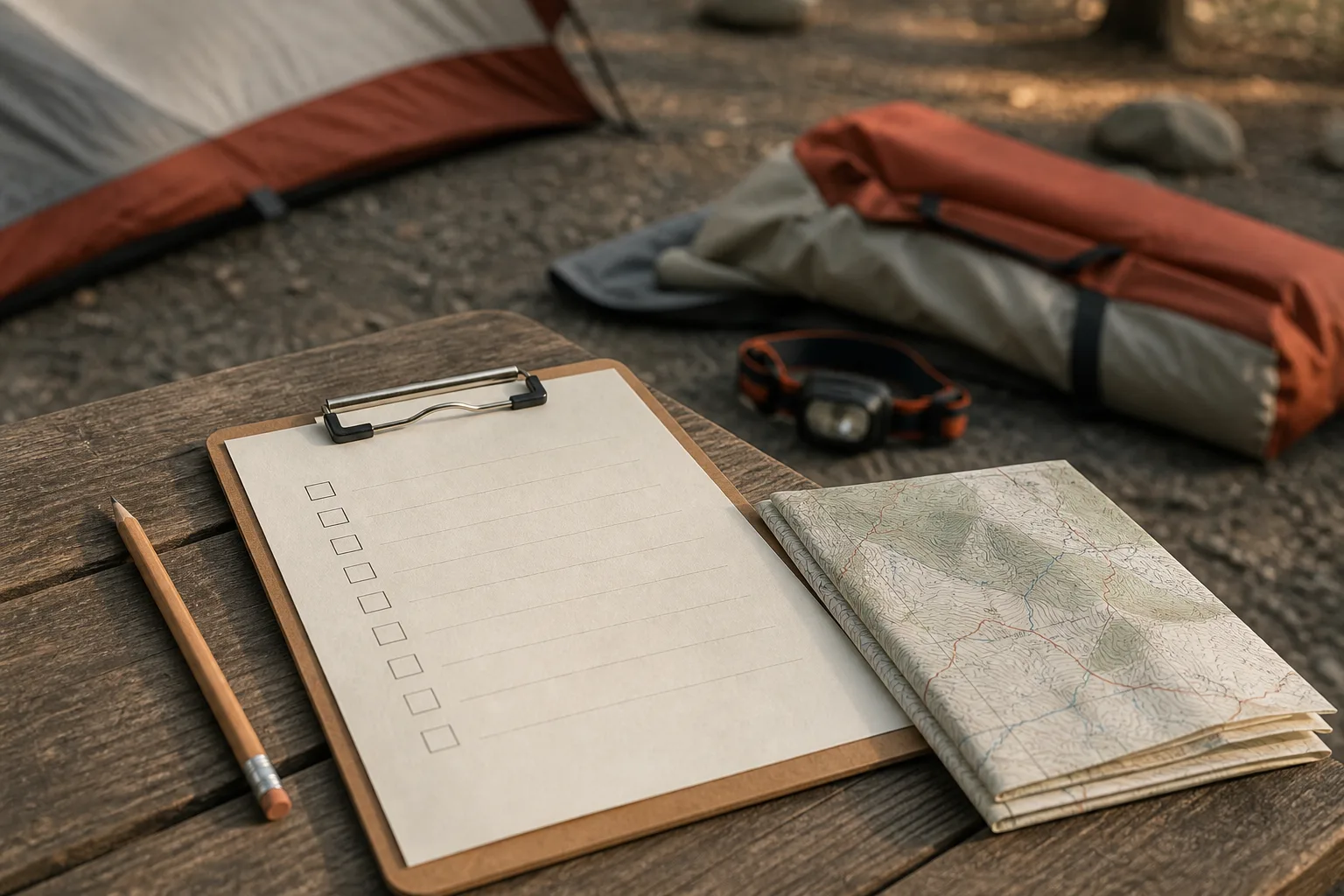
Run this list with your tent still in the bag. It takes less time than re-pitching in the dark.
- Identify the high corner and confirm it matches your preferred sleep direction.
- Look for low spots where rain will pool against the fly — often near the pad edge or against a root barrier.
- Pace the distance to the next numbered post; aim for at least one full tent body width if rules allow repositioning within the pad.
- Check overhead for dead branches on pine loops; wind rises after sunset on many mountain sites.
- Locate the host's wind rose if posted — some pads are assigned with a preferred door bearing for fire and stove rules.
If two checks fail, talk to the host before you commit. Moving after setup disturbs the row and costs you goodwill you may need for a quiet-hours question later.
Surface details that punish lazy staking
Gravel pads hide rocks under the top layer. Kick-test each corner before you drive a stake. Timber-framed pads may have screw-in anchors only at designated points; improvising holes damages the frame and draws a conversation you do not want.
Root bumps telegraph through thin inflatable pads. If the pad has a fixed picnic table or fire ring, treat them as immovable — you pitch around them, not over them.
- Soft pine duff at the pad edge means stakes pull out in rain; use guylines to trees only where permitted.
- Compacted clay holds stakes well but channels water; watch for runoff lines cutting across your doorway.
- Shared pads with electric posts require a clear corridor; measure cord path before you choose the vestibule side.
The light window you actually have
On forest loops the usable window is shorter than sunset. The sun may still be up while the pad is already in shade. That shade cools the ground and hides colour changes in gravel that mark wet patches. If the pad is in shadow, crouch and look across the surface at a low angle — pooling water and fine erosion lines show up as dark seams.
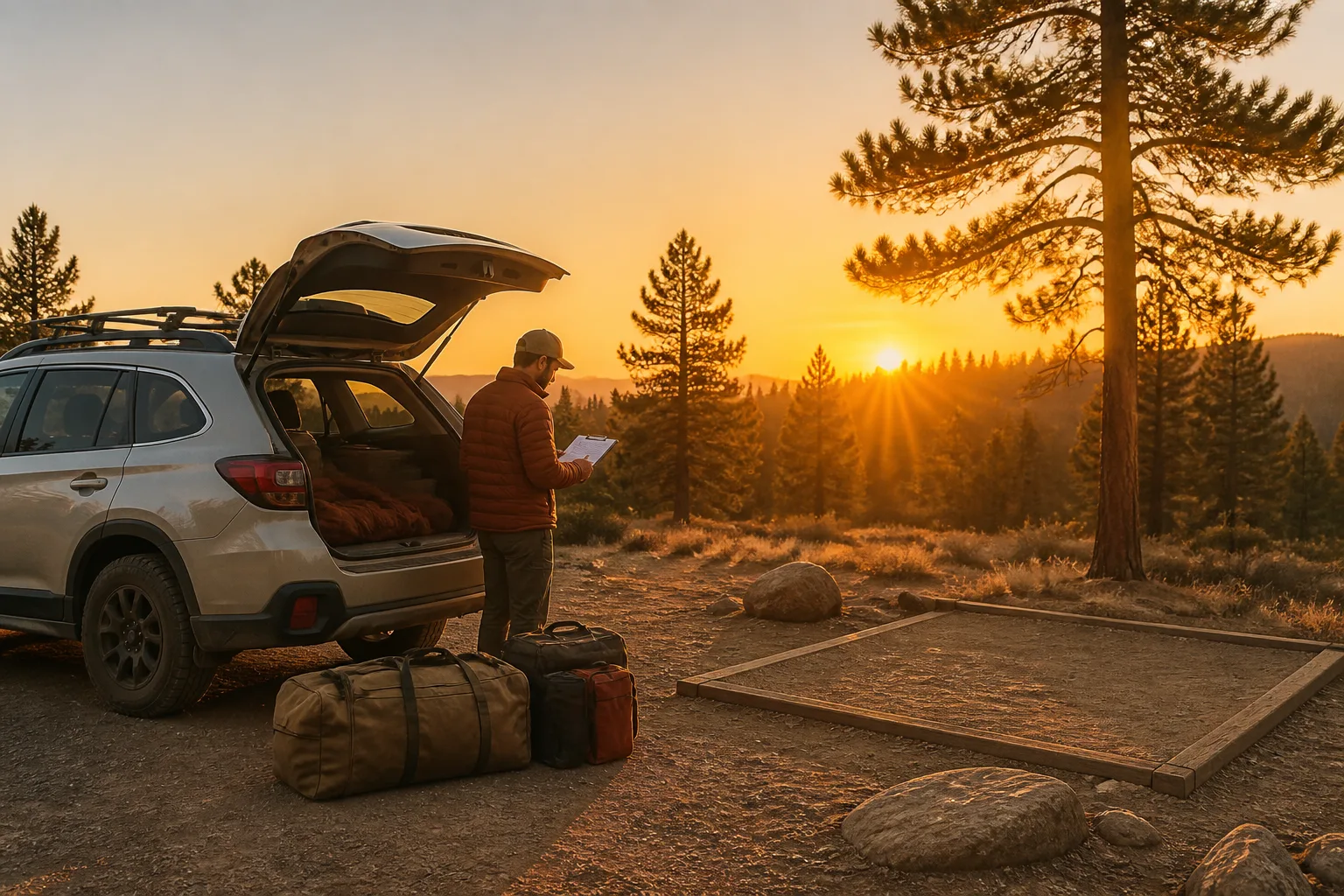
When you arrive late, use your headlamp on its lowest setting and walk the perimeter once before poles. If every tent on the row faces the same bearing, copy it unless wind or posted rules say otherwise. Choosing a pad is trading one inconvenience for another on purpose — make the trade while you can still step two metres left.