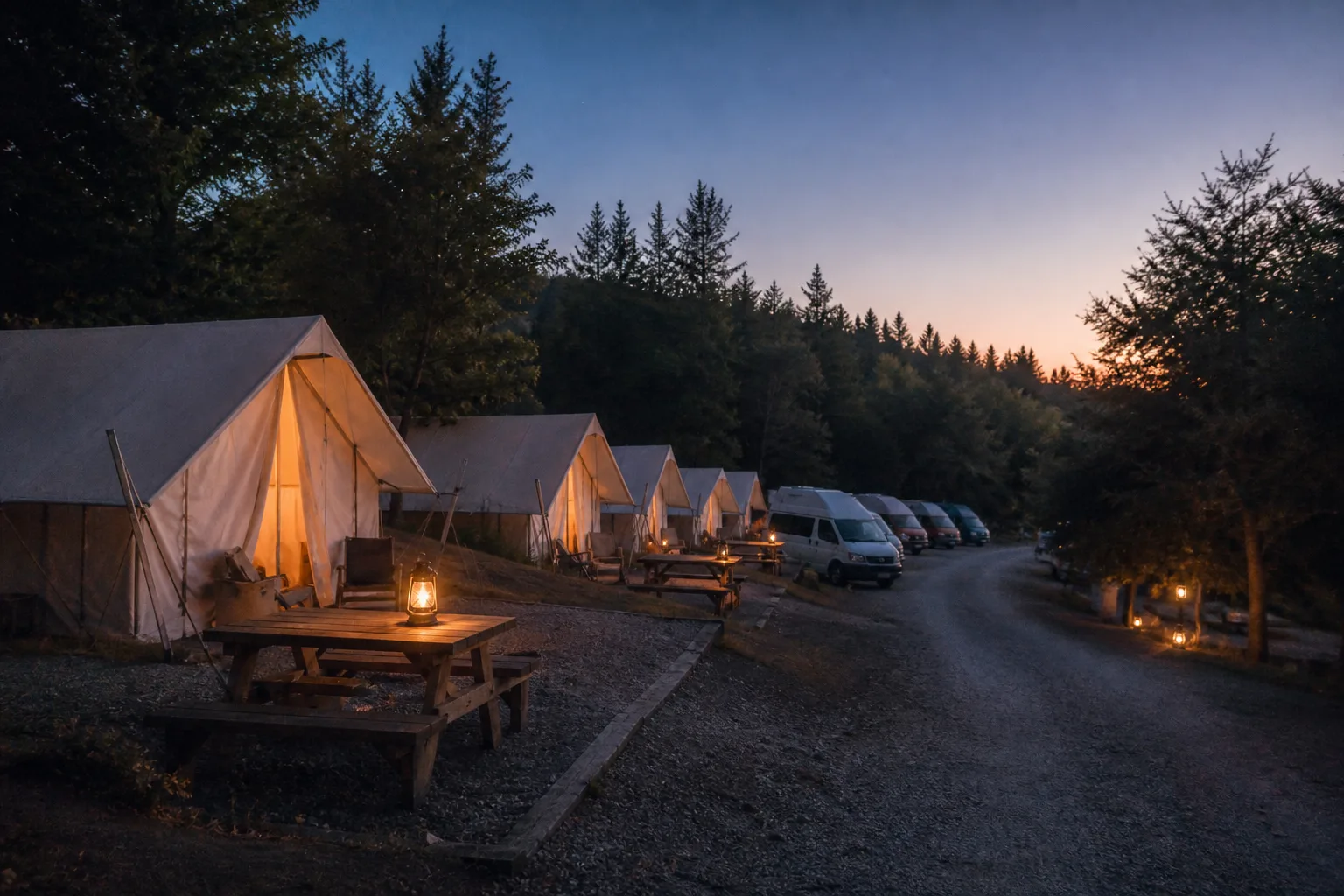
Gravel campground loop at dusk seen from a slight rise, canvas tents spaced along a gentle slope, small lanterns glowing at picnic tables, a row of parked vans farther down the loop, cool blue sky fading behind a dark treeline, 1920x1080

ferrospinel — Campgrounds and overnight stops: how to spend a night among strangers and leave as if you were never there

Overnight ground is part of the route, not a cheaper roof.

A pad with neighbours thirty steps away is a few hours of shared space with people you did not choose. What shows up there is the local order of the place: how ground and water are divided, who greets whom at first light, when sound is expected to drop, and what you may reasonably ask of the next tent. We write that order down so a first night does not have to be guessed in the dark.

Learn More

On the route

A night on the ground shows a place that rooms never will

Lodging under a roof filters a settlement. You meet a desk, a key, and a corridor. A campground puts you in the working order of the same landscape: where vehicles stop, where children are expected to run, which spigot everyone actually uses, and how close a stranger may sit without it becoming a problem. That is why we treat the overnight as its own stretch of the journey, not as a way to skip a bed.

Canvas does not hold sound. You will hear the next site whole, including the joke that was not meant for you and the zipper that goes at three in the morning. Dew finds every outer layer. Showers stack into a line. In peak months the last honest pad is gone by mid-afternoon. Rain turns the loop to paste. Insects do not wait for permission. None of this is a defect in the format. It is the format, and it is readable once you know what to look at.

We stay on these loops in every trip we take. The notes become field guides, first-night checklists, and one-to-one consultations for people who want the sequence named before they arrive. We also compare observations with host groups such as the Highline Host Cooperative and land-steward partners such as the Mesa Trail Conservancy, then we still tell you to confirm the current rule on the ground, because a posted hour from last season is not a promise.

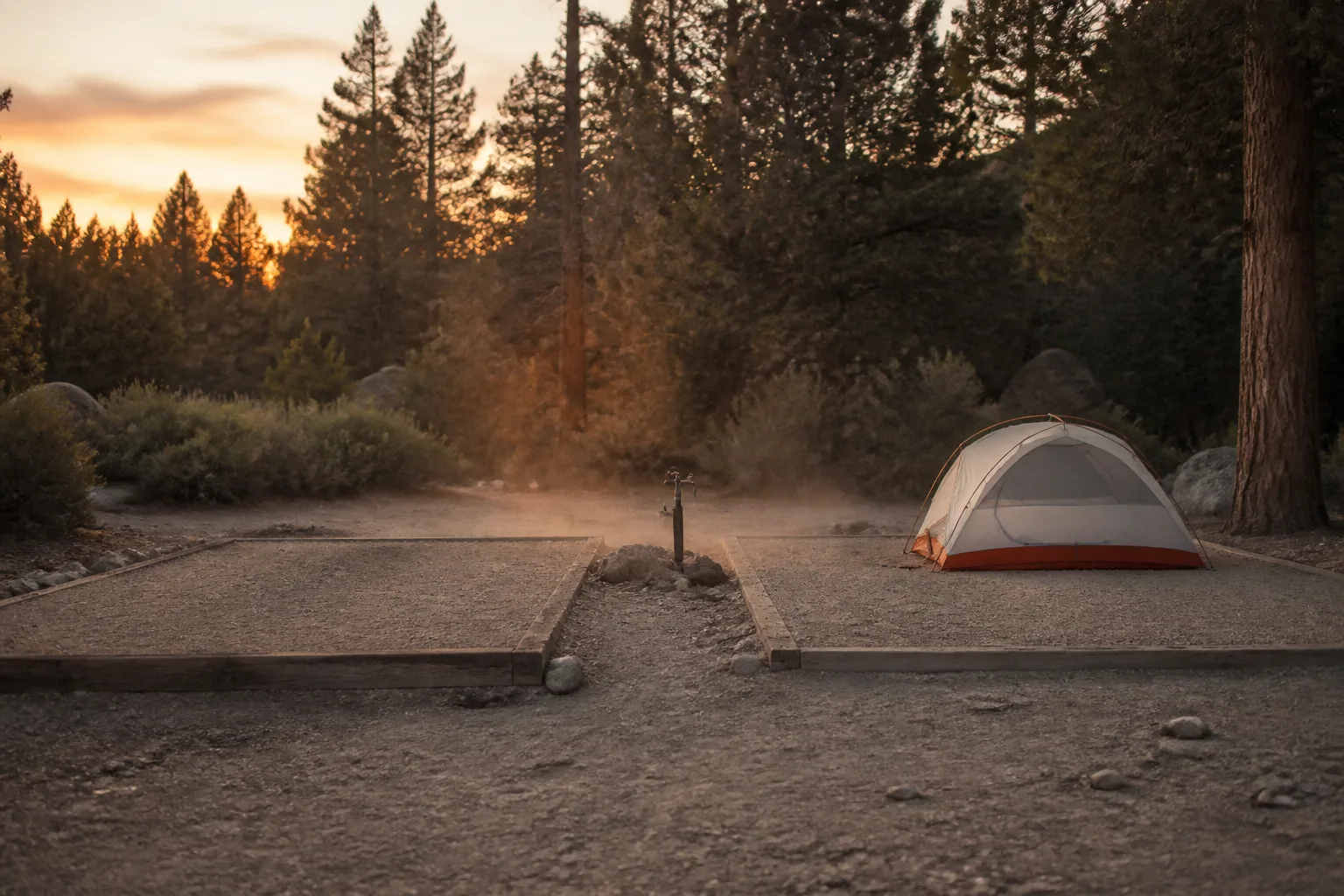
Two neighbouring tent pads on packed earth at dusk, one empty and one holding a low dome tent, a shared water spigot between them, evening light catching dust above the gravel, a forest edge closing the background, 1600x900

Kinds of ground

Four layouts, one shared problem

Organised campgrounds, bare overnight pull-offs, motorhome pads, and tent-only camps do not run on the same conveniences. They do share a question: how do you occupy a marked piece of earth without crowding the people who were already there?

Serviced campground

Numbered pads, a host loop, water, and a shower house. The unwritten work starts at check-in: which loop is quiet after dark, which dump point clogs on weekends, and how far a guy-line may reach before it crosses a neighbour’s walking line.

Bare overnight stop

No hookups, often no host in sight. You bring more, you take more away, and you choose the pitch by drainage and wind instead of by a painted number. Distance to the next vehicle becomes the whole courtesy system.

Motorhome pad

Level concrete, a pedestal, and a generator rule that is easy to miss until someone argues. Slide-outs and awnings eat the shared aisle. The neighbour problem here is mechanical noise more than tent fabric.

Tent-only camp

Cars stay in a lot, pads sit closer, and the kitchen shelter becomes the social clock of the evening. A first-time visitor who treats it like a private backyard will feel the correction quickly, usually from a look rather than a sign.

Field notes

What the notebooks actually add up to

These figures are counts from our own overnight work, not marketing scores. Each layout comparison is a site we walked with a tape and a sketch. Each first-hour walkthrough is a timed arrival we recorded before the light failed. The numbers stay modest because we only log what we can stand beside.

72

Overnight layouts compared across serviced loops, bare stops, motorhome pads, and tent camps

14

Seasons of handwritten notes on quiet hours, water lines, and morning pack-out

240

First-hour walkthroughs timed from parking to a stable pitch before dark

36

Shared kitchens and wash blocks mapped for busy windows and empty stretches

Unspoken order

The first night has a sequence regulars never say out loud

Regulars do not explain the order because it feels obvious. It is not obvious on a first visit. The difficulty is rarely the gear. It is knowing what must happen while you can still see, and what can wait until morning without bothering the row.

  1. Read the loop before you unpack

    Walk the pad. Check slope with a boot, not a guess. Note wind against the treeline, where morning sun will hit the door, and how many steps sit between you and the next fly. The car stays where it will not block the aisle after everyone else arrives.

  2. Pitch while there is still light

    Pegs, guylines, and a dry bag for shoes happen before cooking. Headlamps on a half-built tent read as chaos to people already eating. If the last honest site is gone, we would rather you change the plan than squeeze into a drainage ditch.

  3. Water, kitchen, and the wash block

    Grey water follows the posted drain, not the nearest bush. Shared sinks empty around meal edges and jam in the middle of them. A dish left “for later” becomes someone else’s obstacle. The same clock applies to showers: go early or go late.

  4. Fire, generators, and quiet hours

    If fire is closed, it is closed. Arguing with a dry-season ban does not make smoke safer. Generators have a window; outside it they are just noise against thin tent walls. After quiet hours, voices carry farther than you think, and hosts do walk the loop.

  5. Leave as if the pad stayed empty

    Morning pack-out is the last courtesy. Ash, food crumbs, guyline holes, and a wet wipe in the grass are all traces. We teach a slow circuit of the pad before the engine starts, including the patch behind the wheels that nobody photographs.

  6. Pack for the site you booked, not for every site

    Serviced loops already hold tables, water, and sometimes fire rings. Bare stops hold none of that. A first overnight is kinder on a numbered pad with a host than on an undeveloped shoulder, even if the second looks more remote.

The desk behind the notes

Three people who still sleep on the loops they describe

Consultations are personal because the messy part of a first night is local. These are the editors who take those calls. They do not run a booking desk and they do not offer medical advice.

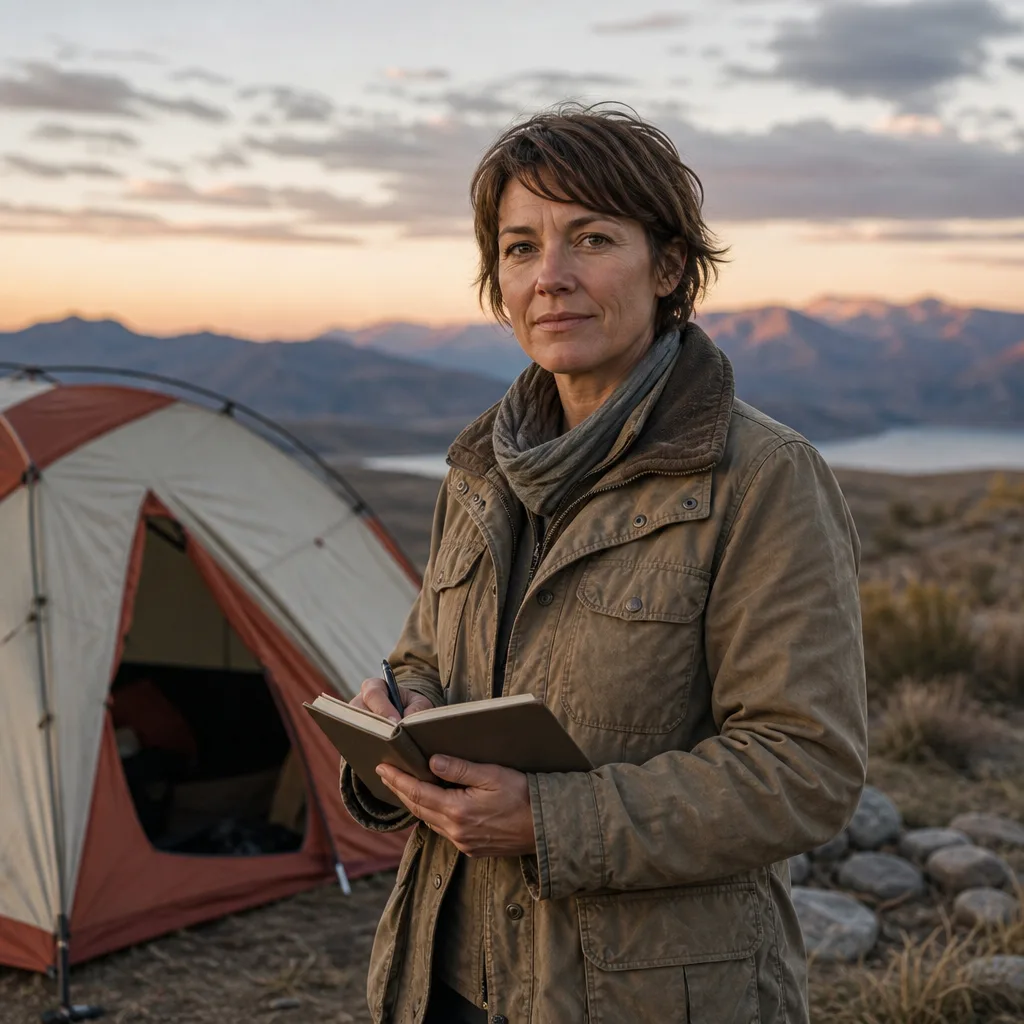
Mara Ellison, a woman in her forties with short brown hair and a weathered canvas jacket, standing beside a pitched dome tent at dusk with a notebook in one hand, 400x400

Mara Ellison

Site layout editor

Certificate in Outdoor Recreation Planning, Pacific Range Institute

Mara walks pads with a tape and a compass and writes the unglamorous geometry: slope, door orientation, and the gap that keeps two flys from arguing. She leads our layout comparisons and host briefings.

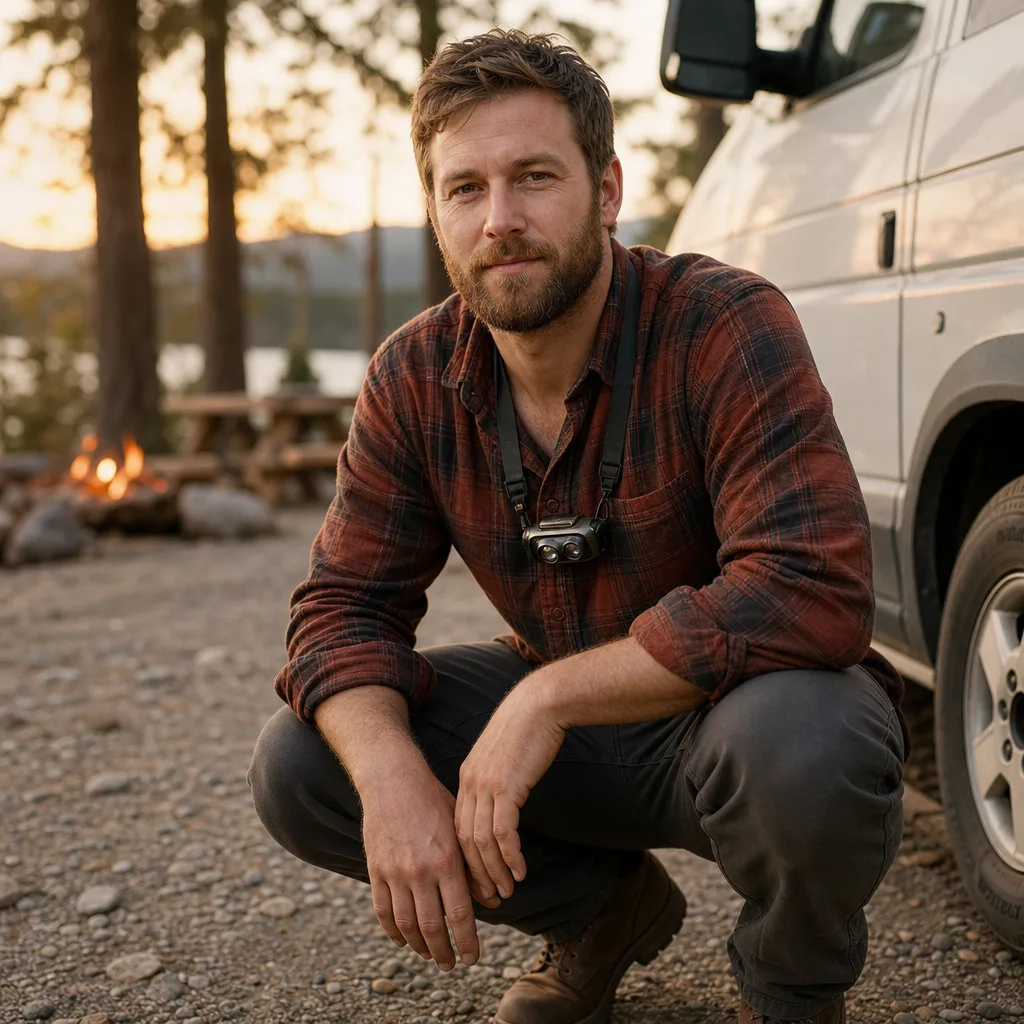
Noah Calder, a man in his thirties with a close beard and a faded flannel shirt, crouching by a parked van on a gravel pad with a headlamp around his neck, 400x400

Noah Calder

Arrival sequence lead

Accredited Campground Host Instructor, Highline Outdoor Guild

Noah times the first hour: what must be pegged before cooking, where the vehicle actually belongs, and how to ask a host a useful question instead of a long story. First-night travellers usually start with him.

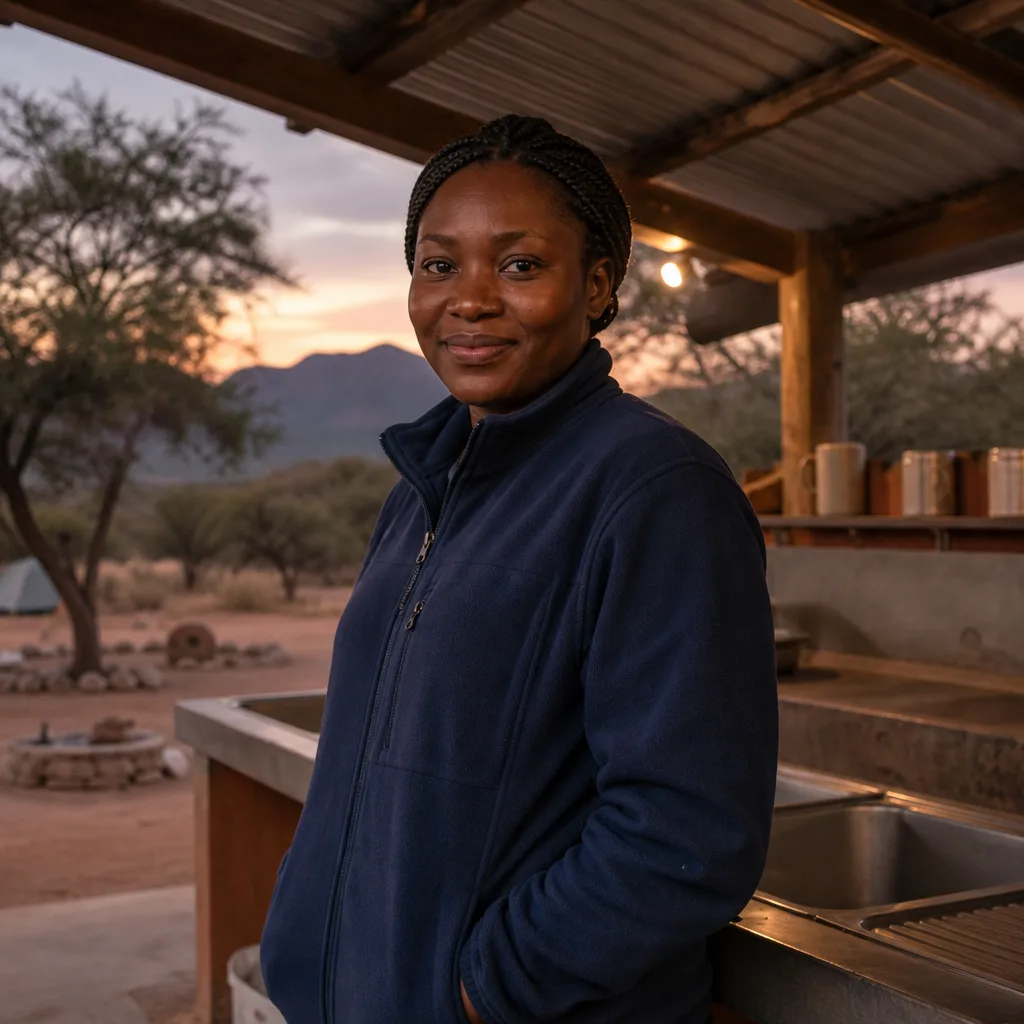
Rhea Okonkwo, a woman in her thirties with braided hair and a navy fleece, standing under a corrugated camp kitchen roof beside metal sinks at twilight, 400x400

Rhea Okonkwo

Shared-site advisor

Night Operations Certificate, Mesa Trail Conservancy

Rhea maps kitchens, showers, grey-water rules, and the social clock of quiet hours. If a client is travelling with children or with a generator, the conversation usually lands on her desk.

From the next pad

What people tell us after the first quiet morning

These are travellers we advised, not staged characters from a brochure. They came with a specific overnight problem and left with a sequence they could run without asking the loop to teach them in the dark.

Elena Briggs

Landscape photographer

I used to pitch wherever the view was best and then listen to zippers until dawn. Mara had me turn the door off the neighbour’s fly and leave a full walking gap. I still get the first light on the ridge. The people thirty steps away get to sleep. That trade should have been obvious; it was not, until someone named the geometry.

Rated 5 out of 5

Owen Hart

School trip coordinator

Twelve students, one kitchen shelter, and a host who enforces quiet hours without smiling. Noah gave us a timed arrival list and Rhea marked the empty windows at the sinks. We cooked before the rush, we were in tents before the loop went still, and we left the tables wiped. The school asked if we could repeat the overnight. That is the result I needed.

Rated 4 out of 5

Priya Nandakumar

Retired shop supervisor travelling by van

I knew engines. I did not know how a generator sounds through a tent wall. Rhea had me shift the charging window and park so the exhaust did not face the next pad. Nobody knocked. I packed out with a clean pad and a note from the host that I could come back. For a first season on the road, that was the whole assignment.

Rated 5 out of 5

Talk through the overnight before you occupy the pad

If you want a first-night sequence written for the kind of ground you booked, write to us. We answer as consultants, not as a booking desk and not as a substitute for the host who will be on the loop that evening.

Request a Consultation

What this project is for

ferrospinel provides knowledge about overnight campgrounds and shared stops, and we offer consultations on that part of a route. The aim is a night that fits the local order and a morning that leaves no argument behind.

Learn More

How to read these pages

ferrospinel provides consultations and practical notes on overnight campgrounds, tent pads, motorhome stops, and the shared ground that comes with them. The information on this site is meant to introduce those services and to describe how such places tend to work. It is not a substitute for the posted rules of a specific host, land manager, or campground.

Tent walls, weather, water, and walking distances affect comfort. For questions about health, cold exposure, physical strain, or whether a given overnight is appropriate for you, speak with qualified specialists. We do not diagnose, treat, or advise on medical matters.

Conditions change between visits. Hours, fire restrictions, water shutoffs, generator windows, and pad availability should be confirmed again with the people who run the ground you are about to occupy. Decisions you make on the road, including where you stop and how you use shared facilities, remain your own.