Shared Kitchen Hours and What Regulars Already Know
Campground kitchen shelters have posted hours and unposted rhythms. The sign tells you when the light switch works; the row tells you when the sinks actually clear. This note separates the two before you walk over with a pot and a hungry schedule.
Two clocks run at once
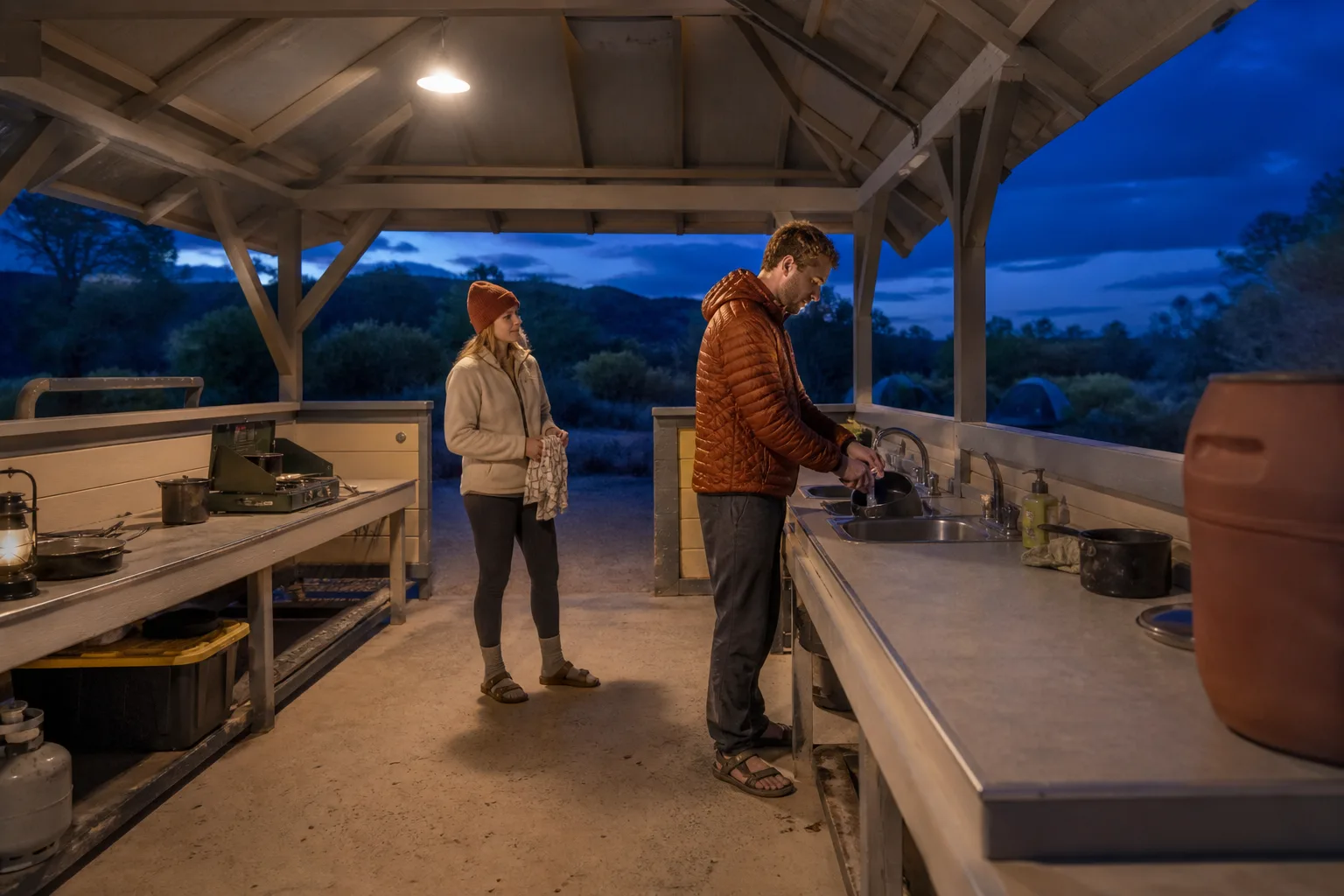
Most shelters post open hours tied to electricity: lights on at dawn, off at quiet time. That is the host clock. The camper clock follows meal edges — coffee before the day warms, dinner when the loop fills with cooking smells, dishes when everyone finishes at nearly the same minute.
Between those edges the shelter can look abandoned for hours. Mid-afternoon is often the widest quiet window on drive-in loops. Regulars use it for long simmers, label-making, and the kind of chopping that needs counter space. Arriving at the same moment as twelve other people is a choice, not an accident; first-timers often make it because they cook when they are hungry, not when the room is empty.
Read the shelter before you carry hot food across the loop. Count occupied burners, wet cutting boards, and bodies waiting without a pot in hand — that last group is a queue even if no one formed a line. If the counter is full, eat cold food at your pad and return when the rush thins. You lose twenty minutes now and gain a calm hour later.
The three meal edges and what changes at each
Morning edge: one sink, strong coffee smell, people in socks and headlamps. Burners go fast because oatmeal and eggs look simple but eat space. Do not start a full pancake spread if two burners are already busy unless you are prepared to finish quickly and wash immediately.
Midday edge: lighter on many loops, but holiday weekends can spike when families cook lunch together. Refrigerators if present are opened often; label your container if the host allows fridge use at all.
Evening edge: the longest queue of the day. Pots share burners, grease smoke builds under the roof, and children run between picnic tables while adults guard stove spots with body language. This is when a dish left in the sink stops being laziness and starts being a territorial claim.
A clean sink at evening rush is not a suggestion. It is the only proof you respect the next person's start time.
Finding the quiet windows
Regulars learn the loop's shape within one night. These patterns repeat often enough to plan around, even when posted hours stay the same.
- Late morning after checkout rush, before early check-ins cook lunch.
- Mid-afternoon when most people are on trails or at the visitor centre.
- After evening dishes, when lights are still on but burners are free.
- Early morning before the coffee line forms, if you can tolerate cold air through open walls.
Weather shifts the windows. Rain pulls everyone under the roof at once; wind makes outdoor cooking impossible and doubles shelter traffic. On those nights, shrink your menu to one pot and one burner, and wash before you sit down to eat if the host allows eating at the counter.
The cleanup rule nobody posts in full
Posted rules usually say wash, dry, and put away. The fuller version on shared loops is: leave the station ready for a stranger who will not speak your language and who arrives tired. That means more than rinsing your plate.
- Scrape food waste into the bin the host designated — not the sink strainer unless signs say so.
- Wash with hot water if available; grease on a shared sponge transfers to the next pot.
- Rinse the sink itself if you left starch, coffee grounds, or oil film.
- Wipe the counter around your station, including splash zones behind the faucet.
- Return shared tools to the hook or drawer shown on the diagram, not where you found them if that place was wrong.
- Report empty soap, propane, or paper towel to the host instead of finishing the last sheet silently.
Leaving a soaking pot "to deal with later" blocks the basin through the next cook's entire prep. If you must soak, use your own basin on the floor beside your feet, not the shared sink. Regulars notice who owns their mess and who treats the shelter like a hotel kitchen.
Negotiating space without a booking system
There is no reservation list for the left burner. Negotiation is eye contact, a raised palm to ask, and moving your kit six inches when someone needs the board. Hogging counter depth with a dry bag and a grocery sack reads as a claim even if you are polite in conversation.
Headphones at the stove are a mistake. You need to hear "behind you" from people carrying hot water. Propane and outlets are shared infrastructure — one long slow cook on the only hot plate is the equivalent of parking across two pads.
When to skip the shelter entirely
Not every meal belongs in the shared room. Cold breakfast at your pad, stove cooking on your own picnic table where permitted, and thermos coffee for an early start all reduce friction for you and for the row. The shelter exists for weather, for complex meals, and for travellers without a camp kitchen kit — not for every boil.
If you are on a loop for one night only, you owe the regulars extra cleanliness, not extra time. Hours on the sign are a floor, not a ceiling — arrive when the room can absorb you, leave it cleaner than you found it, and never treat an empty midday counter as proof that evening will stay the same.