The First Hour on a New Pad: A Timed Checklist
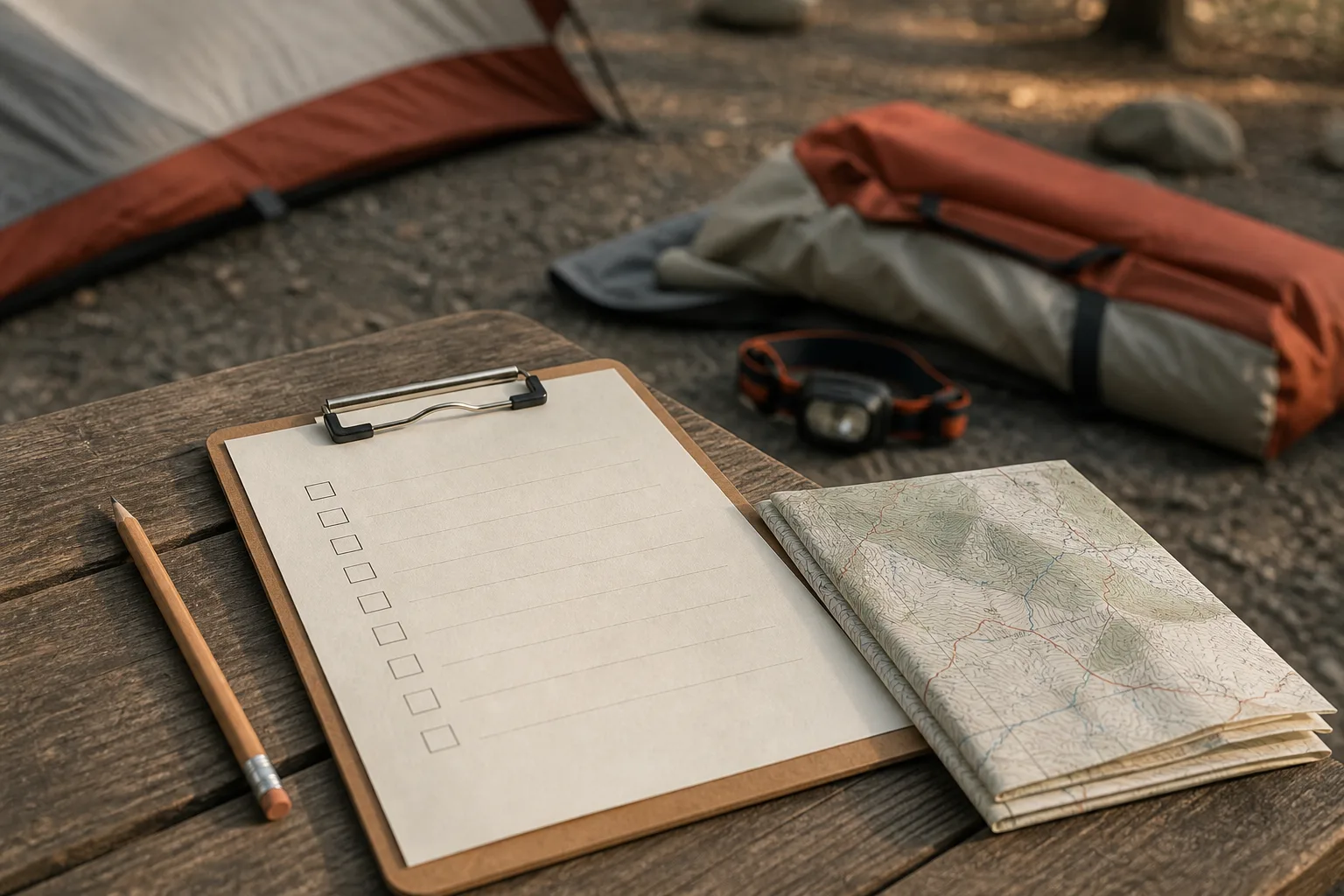
The first hour on a new pad is not leisure time. It is a fixed sequence: park correctly, secure shelter, locate water, and only then open the food bag. Regulars run this list in the same order every arrival so nothing steals daylight from the row.
Why the hour is timed at all
Arrival feels open-ended until the sun drops behind the tree line and three neighbours are still watching you wrestle with poles. The checklist below assumes a standard drive-in tent pad with a host check-in already complete. Adjust times if you arrive after dark — the order stays the same, the pace compresses.
Treat the list as blocking tasks, not suggestions. Cooking before the tent is up means eating in the car or in rain. Searching for water after dark means walking an unfamiliar loop with a headlamp while hungry. The hour buys you a calm second hour — and keeps your arrival from becoming everyone else's background noise.
Minutes 0–15: Park, read the pad, unload essentials only
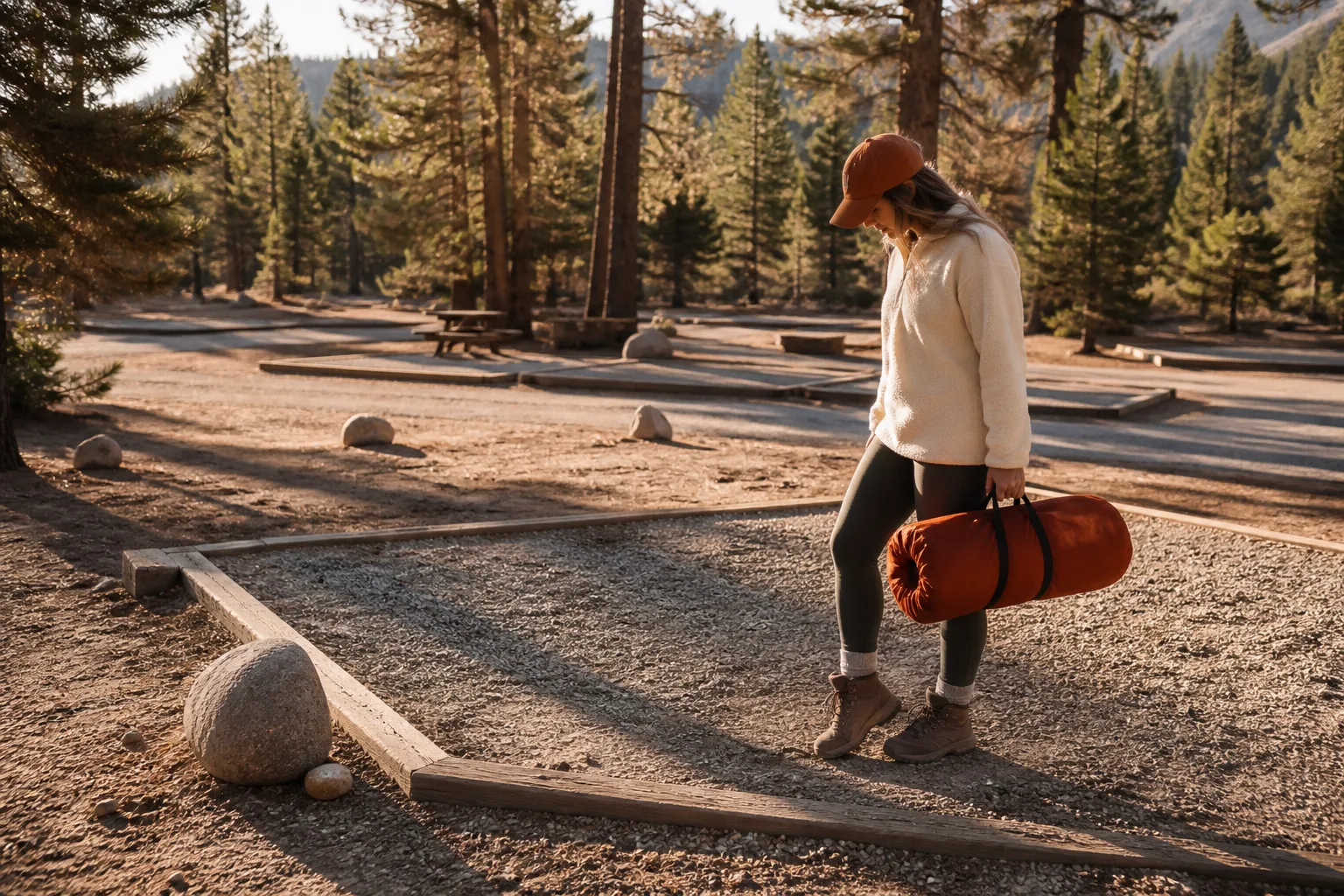
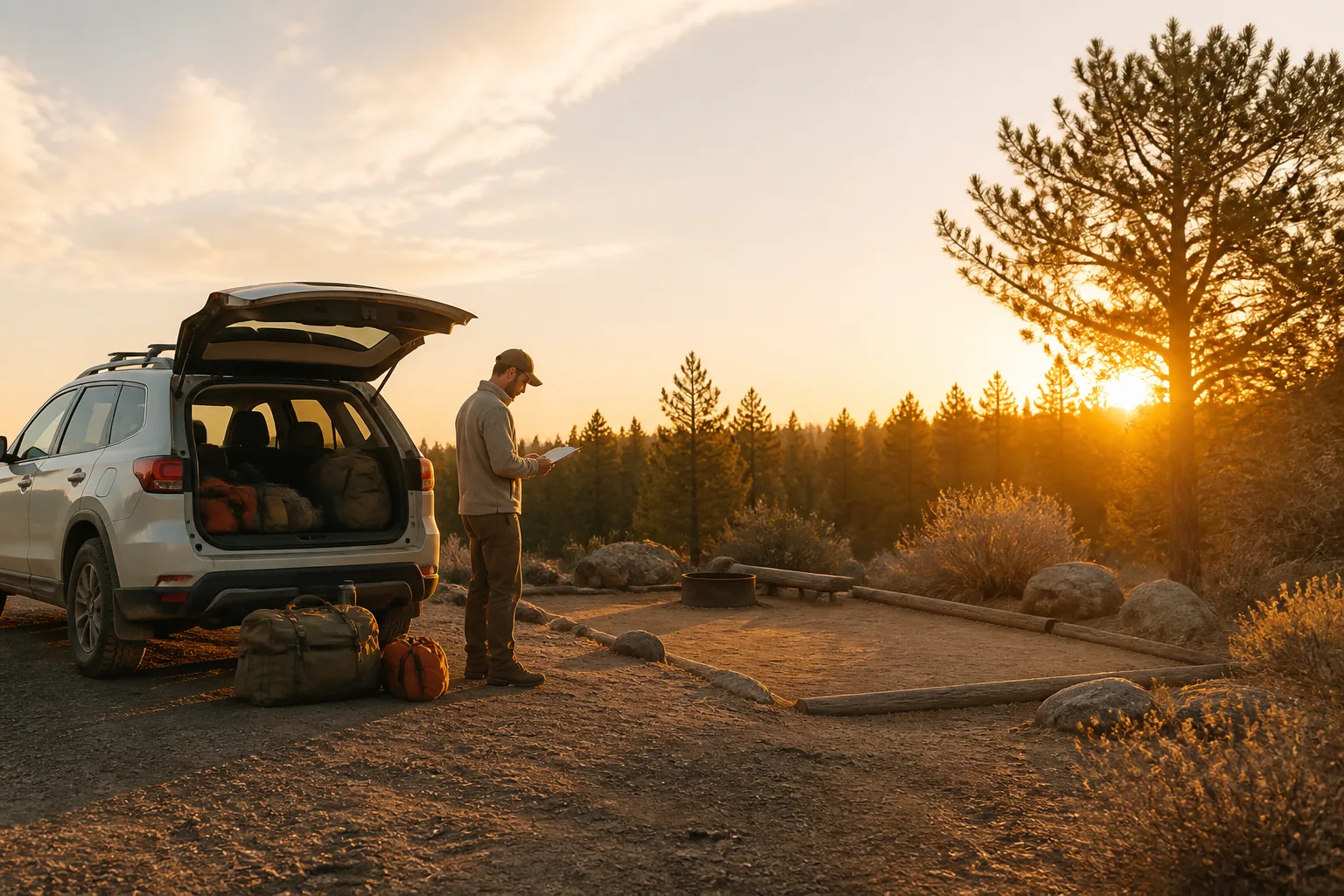
Stop the vehicle where the host indicated — often a spur beside the pad, not on the gravel tent surface itself. Set the brake, note the posted quiet hours on your receipt or the map board, and walk the pad perimeter before you open the hatch.
- Confirm pad number against your assignment.
- Locate the nearest water tap, toilet path, and trash point without gear in your hands.
- Unload shelter, sleep system, headlamp, and water bottles first; leave cooking kits packed until the tent is standing.
- Place wheel chocks or note slope direction if the spur is not level.
If something is wrong with the assignment — double booking, a flooded pad, a tree down — walk to the host now, not after you have spread gear across the gravel.
Minutes 15–35: Pitch and stake while the light is honest
Solo travellers should choose the simplest pitch configuration that handles forecast wind. If the host posted a wind advisory on the board, add guylines now rather than crawling outside later.
A tent half-staked when the row goes quiet is a tent that wakes the row when the wind rises at midnight.
Finish the rain fly if rain is possible overnight, even when the sky looks clear at arrival. Dew and surprise cells do not wait for you to decide. Store empty bags inside the tent body, not on the picnic table where they advertise you are still setting up.
Minutes 35–50: Water, waste, and the walk you will repeat
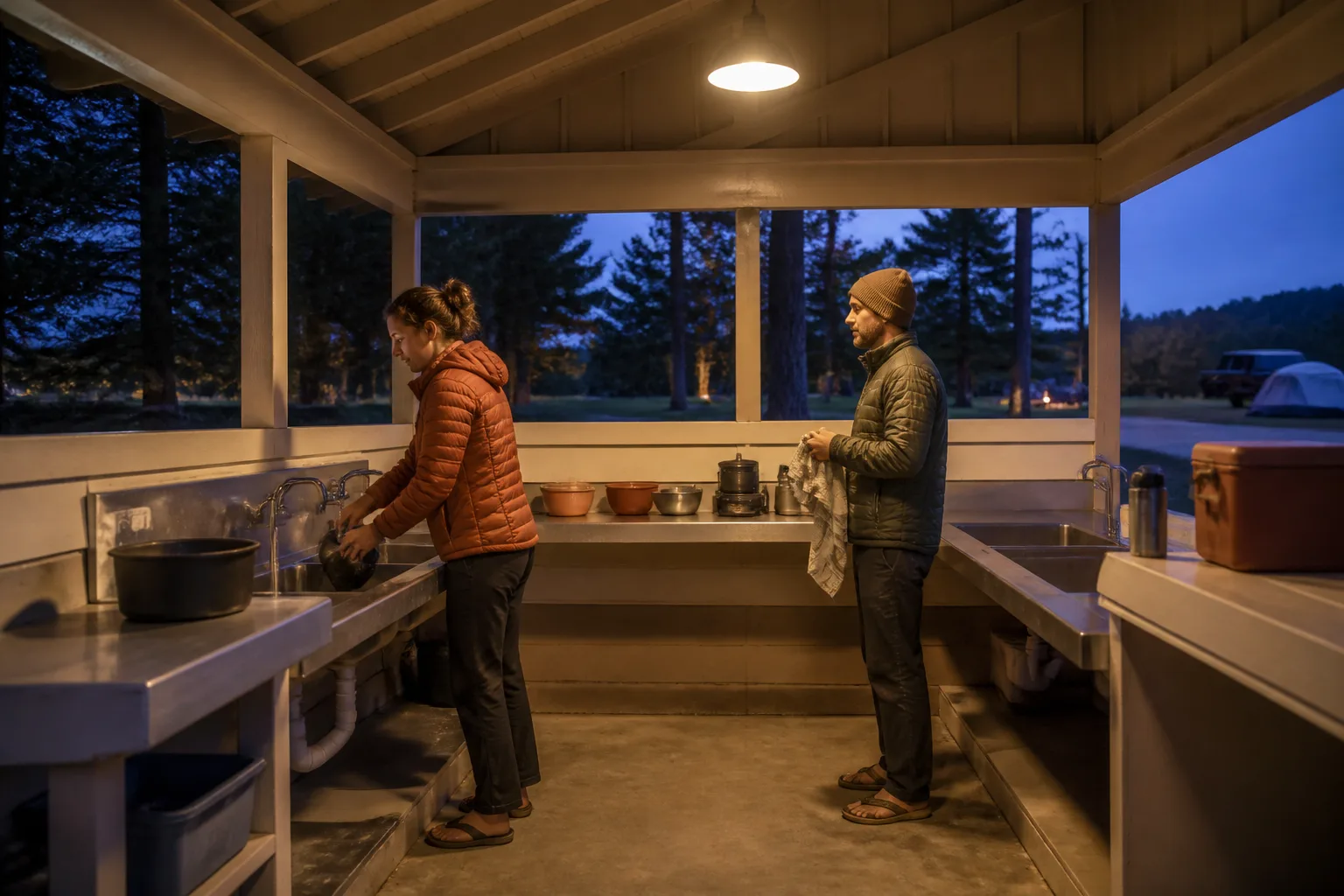
Fill bottles and locate grey-water rules before you cook. Many loops forbid dumping at the site; others want you at a central drain. Know which applies before pasta water exists.
- Run the tap until temperature stabilises; note any posted boil notices.
- Identify bear-proof storage if the host provides lockers or a shared cage.
- Carry trash to the bin on this trip instead of leaving a bag beside the car overnight.
- Walk the toilet path once in daylight so you are not guessing roots after dark.
Minutes 50–60: Sit down only when the row would agree you are done
The last ten minutes are visibility management. Collapse empty packaging, stow tools, lower the hatch, and turn off headlights unless you are the last vehicle still arriving. Neighbours read an open hatch and blazing reverse lights as "still moving in" long after you feel finished.
Now you may eat, brew, or walk to the host board for fire status. If you are behind schedule, cut the menu — cold food tonight beats repitching in the dark. The checklist ends when shelter is secure, water is handled, and your pad looks occupied rather than mid-chaos. Everything else can wait until morning without borrowing anyone else's patience.